NO-WRAP ARM-IN DESIGN
Blood pressure monitor without a Velcro cuff: is an arm-in model easier?
If pulling open, positioning and fastening a standard upper-arm cuff is the step that makes home checks difficult, a fixed arm-in monitor removes that specific barrier. Our Gram uses the Saker U90B at the breakfast table; this guide explains what the design fixes and what still needs verification.
Reviewed and updated August 23, 2026
THE FAST ANSWER
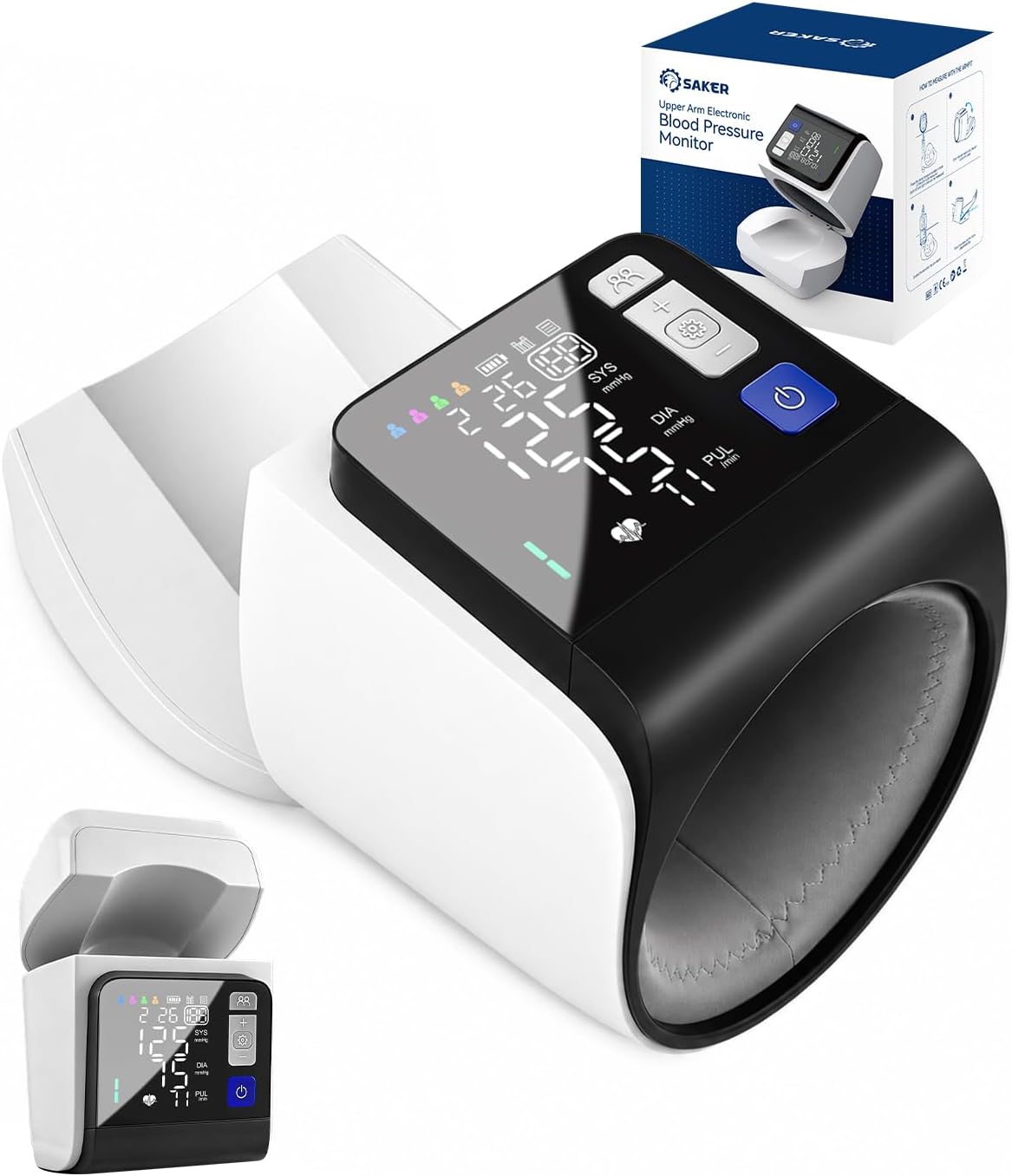
Saker arm-in blood pressure monitor
The Saker U90B is worth comparing when Velcro, grip and cuff positioning are the barrier. Slide the arm into the fixed tunnel instead—but confirm arm fit, exact-model validation and the measurement routine with the user's clinician before buying.
How to choose well
- Identify the actual barrier. An arm-in design helps with pulling, wrapping and fastening; it does not solve every fit, mobility or accuracy concern.
- Measure the intended user's upper arm and compare it with the exact model's published fit range.
- Check the exact model—not only the brand—against a recognized validation registry and ask the user's clinician what they recommend.
- Plan a stable tabletop location. Convenience improves when the monitor already lives where the routine happens.
Decision shortcuts
Products worth comparing
Every green Amazon button opens the exact product listing. Product photos, names and links are tied to the same verified item.
Saker arm-in blood pressure monitor
Its fixed tabletop opening removes the separate task of pulling apart, positioning and fastening a loose Velcro cuff.Why it may work: Our Gram can slide her arm into the fixed opening instead of tearing apart, positioning and refastening a large Velcro cuff. Keeping it at the breakfast table turns a difficult setup task into a repeatable family routine.
Before buying: Ease of setup is not proof of clinical accuracy. Confirm the U90B arm-fit range, exact-model validation, current returns and the user's clinician requirements.
A clinician-recommended validated upper-arm monitor
Why it may work: A conventional model may be the better choice when verified clinical validation, portability or a wider fit range matters more than avoiding cuff setup.
Before buying: The user may still need help positioning and fastening the cuff consistently. Ask the clinician which exact model and routine they prefer.
What usually goes wrong
- Confusing no-wrap with cuffless. An arm-in monitor still measures at the upper arm; the cuff is built into the tunnel.
- Assuming an easier design is automatically an accurate or clinically validated design.
- Ordering before measuring the intended user's upper arm and checking the opening range.
- Letting a convenient table location replace the timing and preparation instructions from the manual or clinician.
Questions shoppers ask
What is a blood pressure monitor without a Velcro cuff?
A fixed arm-in monitor houses the inflatable upper-arm cuff inside a tabletop tunnel. The user slides an arm into the opening instead of wrapping and fastening a separate cuff.
Who may find an arm-in monitor easier?
The design may help Gram, Gramp or anyone who finds pulling Velcro, gripping a cuff or positioning it one-handed difficult. Arm fit and the ability to use the controls still matter.
Can someone put on an arm-in blood pressure monitor by themselves?
A fixed tunnel removes the separate cuff-wrapping step, which may make setup easier for some people. The user still needs to reach the opening comfortably, sit in the position required by the manual and operate the controls. Try the exact routine and follow clinician guidance.
Is an arm-in monitor the same as a cuffless monitor?
No. The Saker U90B still uses an inflatable upper-arm cuff; it is simply built into a fixed opening. Wearables and finger devices use different measurement approaches.
Is the Saker U90B clinically accurate?
Our family uses the monitor, but that experience cannot establish clinical accuracy. Verify the exact U90B model in a recognized device-validation registry and ask a qualified clinician how to compare a home device with office readings.
General shopping information only, not medical, safety or caregiving advice. Prices, features and availability can change.
Browse all buying guides →